Sugar has become a daily part of modern life. From morning tea to packaged snacks, it quietly enters our diet multiple times a day. But as health awareness grows, more people are questioning refined sugar and looking for natural alternatives.
One traditional sweetener that has regained popularity is jaggery.
But is jaggery actually healthier than sugar? Or is it just a marketing myth? Let’s understand the real difference.
What Is Jaggery?
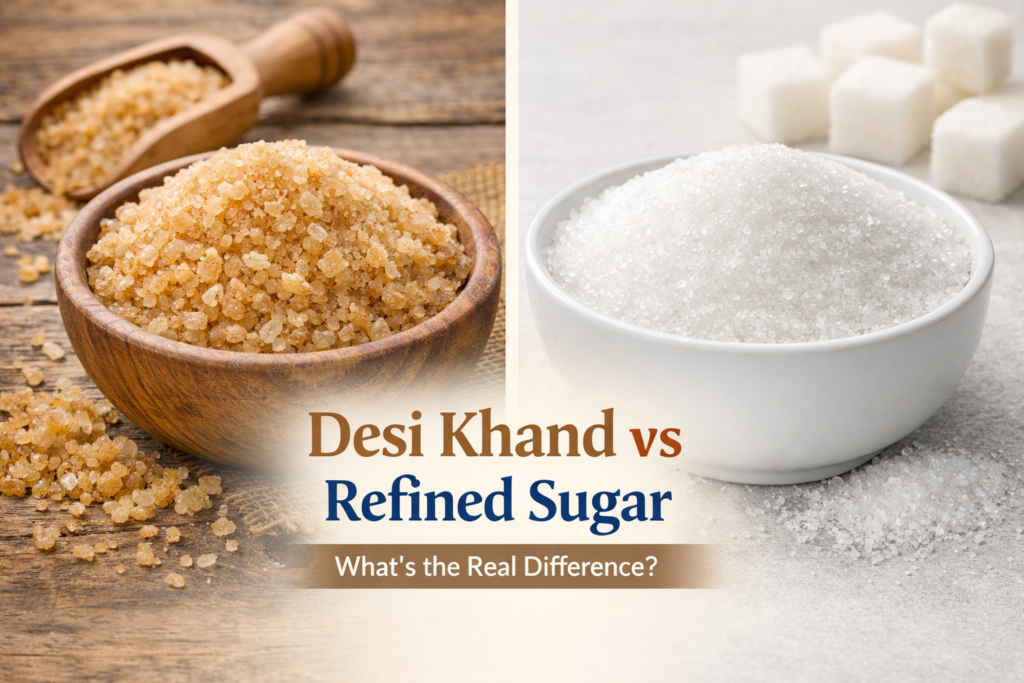
Jaggery is a traditional unrefined sweetener made from sugarcane juice or palm sap. It has been used in Indian households for centuries.
The preparation process is simple and natural:
- Fresh sugarcane juice is extracted
- It is slowly heated to remove moisture
- The thickened liquid is solidified into blocks or powdered form
Unlike refined sugar, jaggery is not subjected to heavy chemical processing. Because of this minimal processing, it retains small amounts of naturally occurring minerals such as:
- Iron
- Magnesium
- Potassium
- Calcium
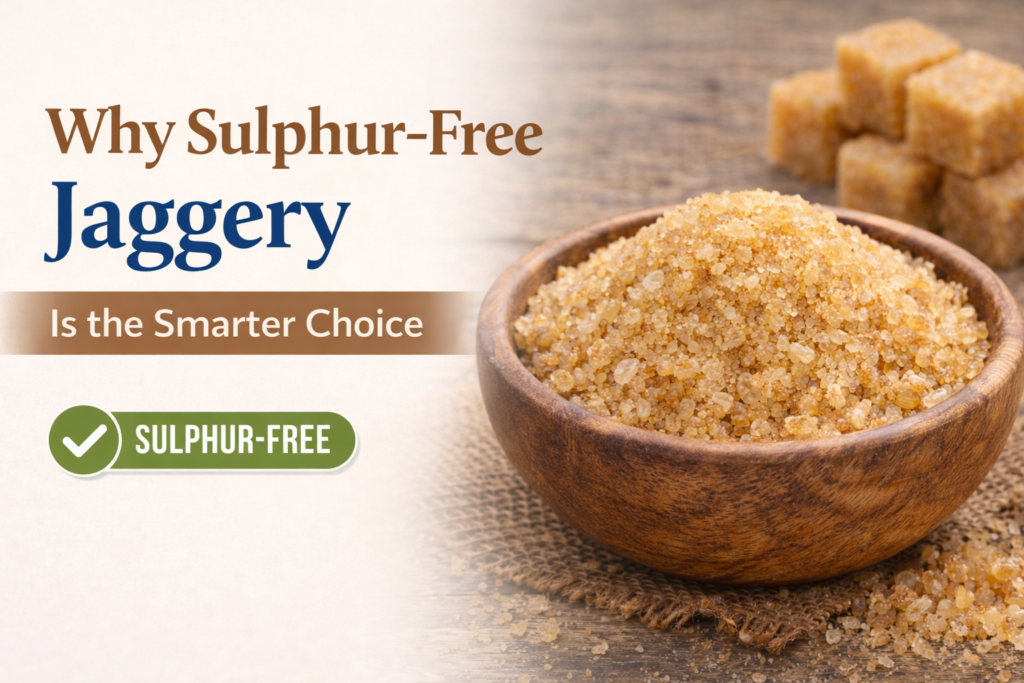
Sulphur-free jaggery is considered superior because it is processed without chemical bleaching agents, maintaining its natural golden-brown color and purity.
What Is Refined Sugar?
Refined sugar is highly processed. During manufacturing:
- Natural molasses is removed
- Minerals are stripped away
- Chemical treatments and bleaching are used
- The final product is crystallized into white sugar
The result is almost pure sucrose.
It contains:
- No vitamins
- No minerals
- No fiber
- Only calories
While it provides quick energy, it offers no nutritional support to the body.
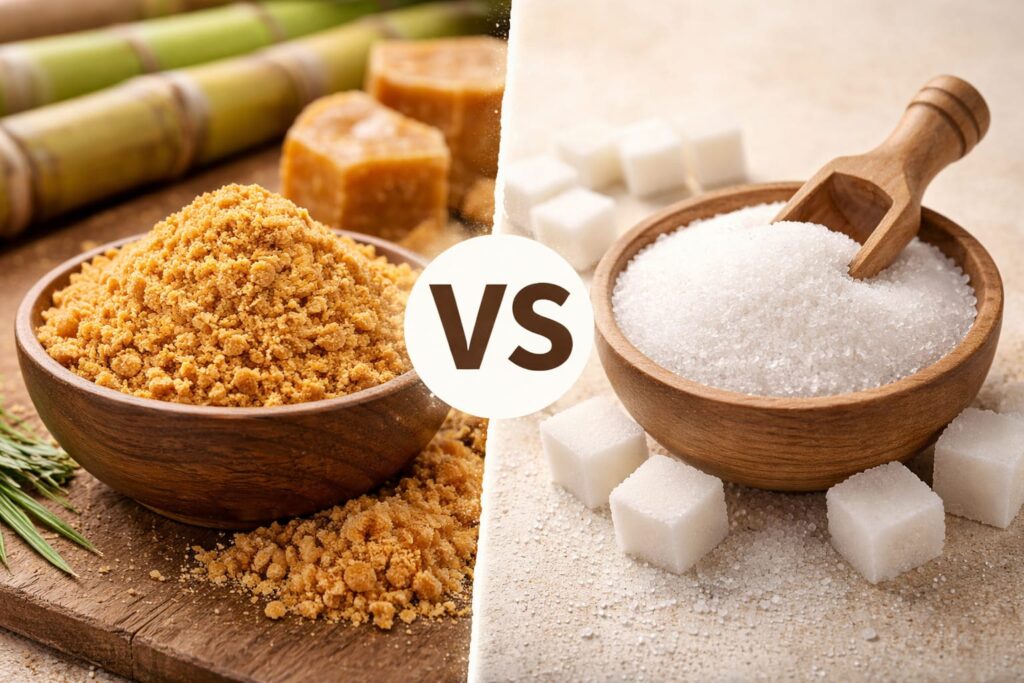
Nutritional Comparison: Jaggery vs Sugar
| Factor | Jaggery | Refined Sugar |
|---|---|---|
| Processing | Minimal | Highly processed |
| Mineral Content | Contains trace minerals | None |
| Chemical Exposure | Lower (if sulphur-free) | Higher |
| Nutritional Value | Slightly beneficial | Empty calories |
| Glycemic Effect | High | High |
It is important to note that both jaggery and sugar raise blood sugar levels. Jaggery is not a low-calorie or diabetic-safe food.
Health Impact: What You Should Know
Jaggery is often preferred because:
- It may support digestion
- It contains iron that can help reduce the risk of anemia
- It is less chemically processed
- It provides a more natural sweetness
However, excess consumption of either jaggery or sugar can lead to:
- Weight gain
- Blood sugar spikes
- Increased risk of metabolic disorders
The real key is moderation.
Replacing refined sugar with jaggery can be a smarter choice, but it should still be consumed in controlled amounts.
Why More People Are Switching to Jaggery
Consumers today are becoming ingredient-conscious. They are reading labels, avoiding chemicals, and preferring traditional foods.
Jaggery fits this shift because:
- It aligns with clean-label preferences
- It supports natural food choices
- It connects with traditional Indian dietary practices
For households, retailers, and food manufacturers, sulphur-free jaggery powder is becoming a preferred sweetening option.
Final Verdict: Is Jaggery Better?
Yes — in terms of processing and trace nutrients, jaggery is a better alternative to refined white sugar.
But no — it is not a “superfood” or a free-pass sweetener.
Choose jaggery for its natural processing and mineral content, but always consume it responsibly.
About Aaharveda
At Aaharveda Foods Private Limited, we specialize in premium sulphur-free jaggery powder, carefully processed to maintain purity and quality.
We supply:
- Bulk quantities for manufacturers
- Retail packaging
- Custom B2B requirements
If you are looking for high-quality jaggery in bulk supply, connect with us to explore reliable sourcing options.